

A Complete Homeowner’s Guide to Financing, Costs, and Smart Decisions
Replacing a roof is one of those home improvement projects that many homeowners know is coming someday, but few look forward to paying for. Unlike a kitchen remodel or luxury outdoor living space, a roof replacement isn't something most people do for fun. It's a necessity.
Yet when leaks start appearing, shingles begin curling, or an exterior inspection reveals significant wear, delaying the project can quickly become far more expensive than addressing it immediately.
One of the most common questions homeowners ask is surprisingly simple:
"What would the monthly payments be for a $15,000 roof replacement?"
The answer depends on several factors, including loan terms, interest rates, credit scores, financing options, and whether you're using home equity, contractor financing, or a personal loan.
In today's market, a $15,000 roof replacement sits near the middle range for many American homes.
While some homeowners pay cash, financing has become increasingly common, especially as roof replacement costs continue to rise due to labor shortages, material pricing fluctuations, and higher residential construction expenses.
This guide breaks down realistic monthly payment scenarios, financing options, hidden costs, expert recommendations, and practical advice homeowners should know before signing a roofing contract.
Understanding the Cost of a $15,000 Roof Replacement
Before discussing monthly payments, it's worth understanding what a $15,000 roofing project actually represents.
In many regions across the United States, $15,000 can cover:
- Asphalt shingle roof replacement on an average-sized home
- Tear-off and disposal of existing roofing materials
- Underlayment replacement
- Flashing repairs
- Ventilation improvements
- Basic waterproofing solutions
- Permit fees
- Standard labor costs
For larger homes, luxury home exterior projects, or premium building materials such as metal roofing, slate, or architectural shingles, costs can climb significantly higher.
The final price often varies based on:
Roof Size
A larger roof requires more roofing materials, labor hours, and waste disposal.
Roof Complexity
Multiple valleys, steep pitches, dormers, skylights, and chimneys increase installation difficulty.
Material Selection
Architectural shingles cost more than standard three-tab shingles. Metal, tile, and slate roofs can cost substantially more.
Geographic Location
Labor rates in California, New York, and other high-cost states are often significantly higher than in rural markets.
Monthly Payments for a $15,000 Roof Replacement
Let's look at realistic financing scenarios.
3-Year Loan (36 Months)
At 8% interest:
- Loan Amount: $15,000
- Monthly Payment: Approximately $470
At 12% interest:
- Monthly Payment: Approximately $500
While payments are higher, you'll pay considerably less interest over time.
5-Year Loan (60 Months)
At 8% interest:
- Monthly Payment: Approximately $304
At 12% interest:
- Monthly Payment: Approximately $334
Many homeowners find this option strikes a good balance between affordability and total interest paid.
7-Year Loan (84 Months)
At 8% interest:
- Monthly Payment: Approximately $234
At 12% interest:
- Monthly Payment: Approximately $266
This term lowers monthly expenses but increases the overall financing cost.
10-Year Loan (120 Months)
At 8% interest:
- Monthly Payment: Approximately $182
At 12% interest:
- Monthly Payment: Approximately $215
These lower payments can be attractive, especially for homeowners managing multiple projects such as siding replacement, gutter installation, window replacement, and exterior painting services simultaneously.
However, longer terms mean significantly more interest paid over the life of the loan.
Quick Monthly Payment Reference Table
| Loan Amount | Interest Rate | 5 Years | 7 Years | 10 Years |
|---|---|---|---|---|
| $15,000 | 6% | $290 | $219 | $167 |
| $15,000 | 8% | $304 | $234 | $182 |
| $15,000 | 10% | $319 | $249 | $198 |
| $15,000 | 12% | $334 | $266 | $215 |
Actual offers vary based on lender requirements and borrower qualifications.
Financing Options for Roof Replacement
Not all financing methods are created equal.
Some homeowners save thousands in interest simply by choosing the right funding source.
Home Equity Loan
For homeowners with significant equity, this is often one of the most affordable options.
Advantages include:
- Lower interest rates
- Fixed payments
- Longer repayment terms
- Potential tax benefits in some situations
Disadvantages include:
- Home serves as collateral
- Closing costs may apply
- Approval process can take longer
Home equity financing is commonly used for major exterior remodeling projects, including roofing, insulation upgrades, energy-efficient windows, and fiber cement siding installation.
Home Equity Line of Credit (HELOC)
A HELOC functions more like a credit card secured by your property.
Benefits include:
- Flexible borrowing
- Interest-only payment options
- Ability to fund multiple projects
Many investors use HELOCs when planning several improvements over time, such as landscaping investment, exterior cleaning services, and future waterproofing solutions.
Personal Loans
Personal loans have become increasingly popular because of their speed.
Pros:
- Fast approval
- No home collateral
- Fixed monthly payments
Cons:
- Higher interest rates
- Lower borrowing limits
- More sensitive credit requirements
Roofing Contractor Financing
Many roofing contractors partner with lenders to offer financing directly.
This option can be convenient, but homeowners should carefully review:
- Interest rates
- Promotional periods
- Deferred interest clauses
- Loan fees
I've seen homeowners focus entirely on the monthly payment while overlooking the total amount they'll repay. That mistake can add thousands of dollars to the project's actual cost.
How Credit Score Impacts Monthly Payments
Your credit score plays a major role in determining financing costs.
Approximate financing ranges:
Excellent Credit (740+)
- Lowest rates
- Best loan terms
- Easier approval
Good Credit (680–739)
- Competitive financing options
- Moderate rates
Fair Credit (620–679)
- Higher interest costs
- More limited lenders
Poor Credit (Below 620)
- Higher monthly payments
- Stricter approval requirements
A difference of just a few percentage points can significantly impact total repayment costs over several years.
Is Financing a Roof Replacement Worth It?
In many cases, yes.
A roof protects nearly every major component of a home.
Delaying replacement can lead to:
- Structural damage
- Mold growth
- Interior water damage
- Insulation deterioration
- Increased energy costs
A homeowner who postpones a necessary roof replacement for two years may ultimately spend far more on repairs than the financing cost itself.
One situation I frequently recommend financing is when a roof has reached the end of its useful life but homeowners lack immediate cash reserves
. Protecting the property should take priority over waiting indefinitely to save the full amount.How Roof Replacement Affects Property Value
A new roof can positively influence real estate value in several ways.
Benefits often include:
- Stronger buyer confidence
- Improved curb appeal
- Better inspection reports
- Reduced insurance concerns
- Faster home sales
Potential buyers tend to view an aging roof as a major future expense.
A recently replaced roof removes that concern.
While homeowners rarely recover 100% of roofing expenses immediately, a new roof often improves marketability and perceived value.
Can Home Insurance Help Cover Costs?
Many homeowners assume home insurance automatically covers roof replacement.
Unfortunately, that's not always true.
Insurance generally covers:
- Storm damage repair
- Hail damage
- Wind damage
- Fallen trees
- Certain sudden events
Insurance usually does not cover:
- Normal aging
- Deferred maintenance
- Wear and tear
If severe weather caused the damage, filing a claim may significantly reduce out-of-pocket costs.
Always document damage thoroughly and obtain professional contractor quotes before beginning work.
Choosing the Right Roofing Contractor
The contractor you choose can impact the project as much as the roofing materials themselves.
Look for:
- Proper licensing
- Insurance coverage
- Written contracts
- Local references
- Detailed estimates
- Strong reviews
Avoid contractors who:
- Demand large cash deposits
- Pressure immediate decisions
- Offer unusually low bids
- Refuse written agreements
A quality roofing contractor should clearly explain installation methods, warranties, material options, and financing terms.
Common Roof Replacement Mistakes Homeowners Make
Focusing Only on Monthly Payments
The cheapest payment is not always the best deal.
A longer loan term may lower monthly costs while dramatically increasing total interest paid.
Skipping Multiple Quotes
Always gather at least three contractor quotes.
Price differences of several thousand dollars are surprisingly common.
Ignoring Ventilation
Poor attic ventilation shortens roof lifespan.
Many homeowners spend thousands on new shingles while overlooking the underlying ventilation problems that caused premature deterioration.
Choosing the Cheapest Materials
Budget products may save money today but cost more later through repairs and earlier replacement.
Forgetting Related Exterior Improvements
Roof replacement often presents an ideal opportunity to evaluate:
- Gutter installation
- Vinyl siding repairs
- Exterior painting services
- Window replacement
- Waterproofing upgrades
Bundling projects sometimes reduces labor costs.
Roof Replacement and Energy Efficiency
A new roof can improve energy performance more than many homeowners realize.
Modern systems often include:
- Reflective roofing materials
- Improved ventilation
- Better underlayment
- Enhanced insulation compatibility
When paired with energy-efficient windows and insulation upgrades, homeowners may notice lower heating and cooling costs.
This is especially true in regions with extreme temperatures.
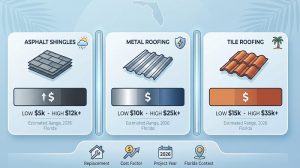
Comparing Roofing Materials
Asphalt Shingles
Pros:
- Affordable
- Widely available
- Easy repairs
Cons:
- Shorter lifespan than premium options
Metal Roofing
Pros:
- Long lifespan
- Energy efficient
- Durable
Cons:
- Higher upfront cost
Architectural Shingles
Pros:
- Better appearance
- Improved durability
- Strong wind resistance
Cons:
- More expensive than standard shingles
Slate Roofing
Pros:
- Exceptional longevity
- Luxury appearance
Cons:
- Extremely expensive
- Heavy structural requirements
Material selection should align with budget, climate, and long-term ownership plans.
Should You Replace the Roof Before Selling?
Often, yes.
An aging roof can become a negotiation point that reduces offers.
Buyers may request:
- Price reductions
- Repair credits
- Replacement before closing
In competitive real estate markets, a new roof frequently improves buyer confidence and enhances overall curb appeal.
For property investors, roof replacement can be one of the most impactful exterior improvements when preparing a property for sale.
Frequently Asked Questions
What is the average monthly payment for a $15,000 roof replacement?
Most homeowners finance a $15,000 roof replacement for approximately $180 to $335 per month depending on loan term, interest rate, and credit profile.
Can I finance a roof with bad credit?
Yes. Many lenders offer financing programs for lower credit scores, although rates are typically higher.
Is a home equity loan better than contractor financing?
In many situations, home equity loans offer lower interest rates and lower overall borrowing costs.
Does a new roof increase home value?
A new roof can improve property value, increase buyer confidence, enhance curb appeal, and help homes sell more quickly.
How long should a new roof last?
Typical lifespans include:
- Asphalt shingles: 20–30 years
- Architectural shingles: 25–40 years
- Metal roofing: 40–70 years
- Slate roofing: 75–100+ years
Should I replace gutters at the same time?
Often yes. Combining roof replacement with gutter installation can improve water management and reduce labor costs.
Final Thoughts
A $15,000 roof replacement may feel like a major expense, but when viewed through the lens of long-term property protection, it often becomes one of the smartest investments a homeowner can make. Depending on financing terms, monthly payments generally fall somewhere between $180 and $500, giving many households flexibility they might not realize exists.
The key is looking beyond the monthly payment itself. Consider the total borrowing cost, roofing material quality, contractor reputation, warranty coverage, and how the project fits into your broader home improvement goals. Whether you're upgrading a primary residence, protecting a rental property, or enhancing a luxury home exterior before selling, a properly installed roof contributes to property value, weather protection, energy efficiency, and long-term peace of mind.
Homeowners who approach the project strategically—obtaining multiple contractor quotes, exploring financing options, and considering related exterior remodeling upgrades—typically achieve the best overall results and the strongest return on their investment.

Tinggalkan Komentar